Ecommerce web design for Shopify and WooCommerce. Custom store builds, product page design, and UX optimisation built to maximise conversions from day one.
Our eCommerce Web Design service is a complete system — strategy, execution, and reporting all in one place.
Bespoke Shopify or WooCommerce design built around your products and brand — no templates.
Category structure, URL hierarchy, and internal linking designed to rank product and category pages.
Stripe, PayPal, Afterpay, Klarna, and other gateways integrated securely and tested thoroughly.
Streamlined mobile checkout flow reducing friction and cart abandonment on every device.
Trust signals, urgency elements, and upsell flows built in to increase average order value.
Smooth go-live with full QA, speed testing, and ongoing technical support post-launch.
Refined across 300+ client engagements. You know what's happening at every step and why.
We learn your products, customers, and goals — then recommend the right platform and feature set.
High-fidelity store designs including product pages, collections, and checkout reviewed with you first.
Full development with payment gateway integration, mobile QA, speed testing, and SEO configuration.
Smooth go-live followed by conversion tracking setup, training, and post-launch performance monitoring.
We combine senior specialist expertise with AI tools to surface faster insights and outperform agencies still working manually.
You own every account, asset, and piece of data we create. No black boxes. Full access, always.
Our team holds Google's own certifications and meets ongoing performance benchmarks — not just a badge on a website.
Every strategy decision is tied to traffic, leads, or revenue. We care about what moves your bottom line — not vanity metrics.
One senior point of contact who knows your business inside-out. No account hand-offs, no junior-only teams.
Month-to-month on every service. We earn your business every month through results — not through long-term contracts.
A standard business website exists to inform and persuade. An ecommerce website does all of that — and then completes a financial transaction. That additional step introduces an entirely different layer of design, development, and optimisation requirements: product database management, inventory integration, payment gateway security, checkout flow psychology, cart abandonment mechanics, and post-purchase communication. Getting any of these wrong costs you sales, trust, and repeat customers.
Most ecommerce businesses underestimate how much the quality of their website directly determines their revenue. They focus on driving traffic — through Google Ads, social media, SEO — while their website silently kills conversions at 1-2% when the industry benchmark for an optimised store is 3-5%. A site that converts at 1% and receives 10,000 visitors generates 100 sales. The same traffic to a site converting at 3% generates 300 sales. The difference is the website, not the marketing.
At MH Tech Solutions, we design and build ecommerce websites that are engineered to convert — with platform selection, visual design, UX architecture, and post-launch optimisation all aligned to the single goal of turning visitors into customers and customers into repeat buyers.
Shopify is the right choice for most businesses launching or migrating an ecommerce store. It is a hosted platform — which means security, updates, and hosting are managed for you — with an extensive app ecosystem, native payment processing, and strong built-in analytics. Shopify handles everything from a 10-product store to a 100,000-SKU catalogue, and its checkout is among the highest-converting in the industry. We build on Shopify for businesses that want a reliable, scalable store without managing server infrastructure. Shopify is ideal for: consumer products, fashion, beauty, food and beverage, sporting goods, and any brand selling direct-to-consumer.
WooCommerce is a WordPress plugin that transforms a WordPress site into a fully-featured ecommerce store. It is the right choice when you need maximum flexibility, complex customisation, or deep integration with existing WordPress content. Because WooCommerce is open-source, there are no per-transaction fees and no platform restrictions on what you can build. It requires more technical management than Shopify — hosting, security, updates — but gives you full control over every aspect of the store. WooCommerce is ideal for: businesses already on WordPress, stores requiring complex product configurators, subscription businesses, and brands with specific integration requirements.
Magento is enterprise ecommerce — appropriate when you have complex multi-store requirements, large catalogues (50,000+ SKUs), sophisticated B2B pricing rules, or international multi-currency operations. The platform delivers unmatched power and flexibility but requires significant development resource and ongoing maintenance. We recommend Magento only when the complexity of the business genuinely requires it — for most growing ecommerce businesses, Shopify or WooCommerce is the more pragmatic choice.
The product page is where purchasing decisions are made. It must answer every objection a buyer has before they can talk themselves out of purchasing: What does it look like from every angle? What are the exact dimensions, materials, or specifications? What do other buyers say about it? What happens if I need to return it? How quickly will I receive it? We design product pages with multiple high-quality images, zoomable galleries, structured specifications, visible reviews, clear returns policy, and prominent stock and delivery information — all above the fold or one short scroll away.
Stores with large catalogues live or die by their navigation. If customers cannot find what they are looking for quickly, they leave. We implement intelligent category structures, layered filtering (by size, colour, price, brand, availability), and on-site search with autocomplete and result ranking. For Shopify stores, we configure Shopify Search and Discovery or integrate Searchie for advanced search functionality. Effective filtering reduces the path from landing to product page, which directly increases conversion rate.
The checkout is the highest-stakes part of any ecommerce flow. Industry data shows 70% of shopping carts are abandoned — most of those at checkout. We minimise checkout friction through: guest checkout option (removing the forced account creation that kills conversions), progress indicators, address autocomplete, multiple payment options (credit card, PayPal, Afterpay, Apple Pay), and trust signals (SSL badge, money-back guarantee, secure payment icons) displayed prominently throughout the flow.
Trust is earned through accumulation of evidence, not by a single badge. We implement trust signals at every stage of the customer journey: verified customer reviews on product pages, brand story and social proof on the homepage, returns policy and shipping times clearly stated before checkout, and security credentials displayed at payment. For new brands without reviews, we design the site to build trust through transparency — detailed about page, clear contact information, and visible social media presence.
Over 60% of ecommerce traffic comes from mobile devices, and mobile conversion rates lag desktop by a significant margin on most sites — not because mobile shoppers do not buy, but because most ecommerce sites are designed on desktop and adapted for mobile as an afterthought. We design mobile-first: the mobile experience is the primary design, and desktop is the adaptation. This approach produces ecommerce sites that perform on the device most of your customers actually use.
Slow pages cost sales. Google data shows that a 2-second delay in load time increases cart abandonment rate by 87%. We optimise every ecommerce build for Core Web Vitals compliance: image compression and next-gen formats (WebP), lazy loading for off-screen content, minimising render-blocking scripts, and appropriate caching configuration. Target: under 2.5 seconds LCP on mobile, under 0.1 seconds FID, and zero layout shift.
For clients running Google Shopping campaigns, we configure the product data feed from your store to Google Merchant Centre — ensuring titles, descriptions, prices, availability, and images meet Google’s requirements and are optimised for Shopping ad performance. A clean, optimised Shopping feed dramatically improves ad impression share and conversion rate from Shopping campaigns.
An ecommerce website is never finished. Post-launch, we provide ongoing support: conversion rate analysis and A/B testing, performance monitoring, product addition and catalogue management, promotional campaign setup, and technical maintenance. We offer monthly retainer packages for clients who want ongoing optimisation rather than a one-time build.
Contact MH Tech Solutions to discuss your ecommerce project — platform selection, design brief, timeline, and investment.
eCommerce Web Design is part of our Ecommerce Solutions service — explore the full ecosystem of tools we use to build and scale online stores.
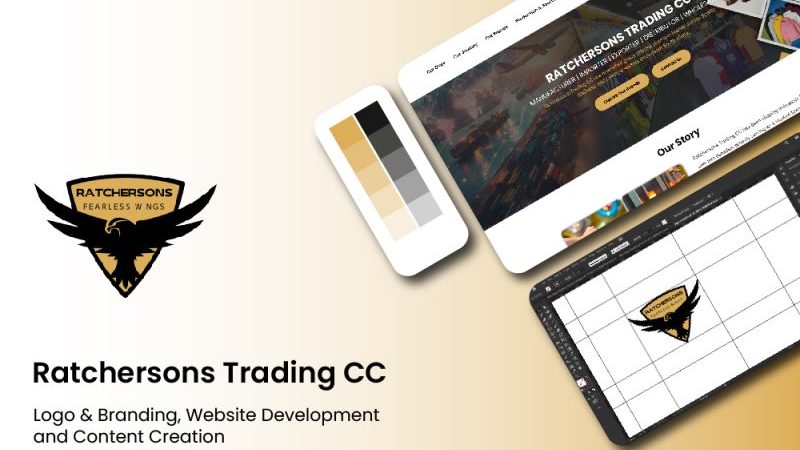 Digital Marketing
 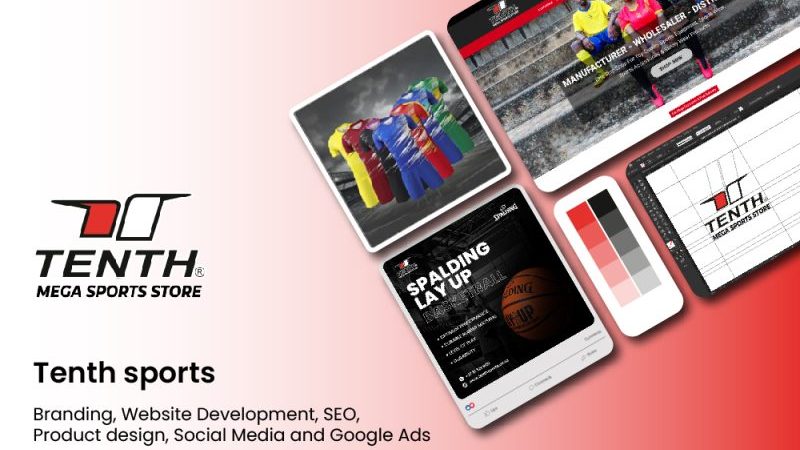 Ecommerce
 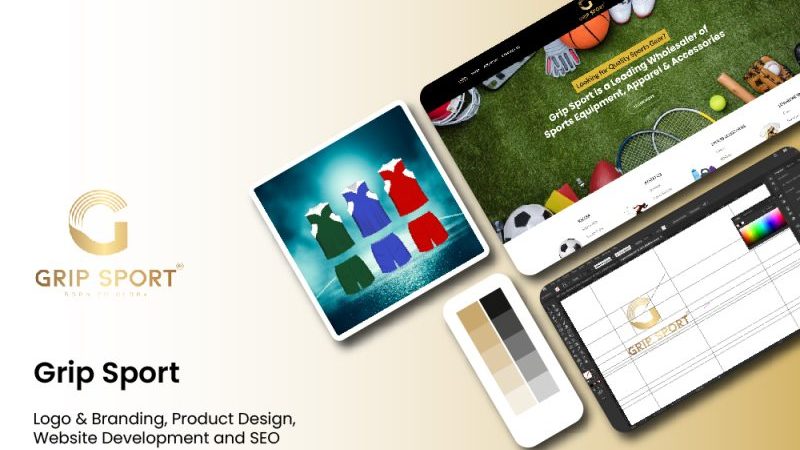 Ecommerce
 Real results from real clients. Here's what businesses say after working with MH Tech Solutions.
No. Every service we offer runs on a month-to-month basis with 30 days notice to pause or cancel. We earn your continued business by delivering results, not by trapping you in a contract. You are free to leave at any time.
You own everything: your website, Google Ads account, social profiles, email lists, and any content we produce. Full administrative access is yours from day one. If you ever stop working with us, every asset stays with you and we remove our access promptly.
Google Partner status is verified directly by Google and requires our team to pass ongoing certification exams, maintain a minimum managed spend threshold, and demonstrate strong account performance. It is not a paid badge and it is not self-awarded.
We use AI tools across research, content strategy, campaign optimisation, and lead capture automation to surface insights faster and execute more efficiently than agencies working manually. AI is a tool our specialists direct. It does not replace the strategic thinking or hands-on work your account requires.
Fill in our free proposal form and we will review your situation within 24 hours. We will send a clear strategy with transparent pricing based on your specific goals. There is no sales pressure and no obligation to proceed.
No sales pitch. No fluff. Just an honest look at your digital presence and a clear plan to grow it — free, with no obligation.